
Bring Syriac Back to Daily Life
A nation survives when it remembers who it is and passes that identity on. Language is part of that strength. It carries memory, faith, and the way a people sees itself across generations. That is why Syriac matters. It connects us to a deep part of our Christian heritage and gives us a direct link to the roots that shaped us. Learning it makes us stronger in who we are. Teaching it to our children helps keep that inheritance alive, clear, and real.
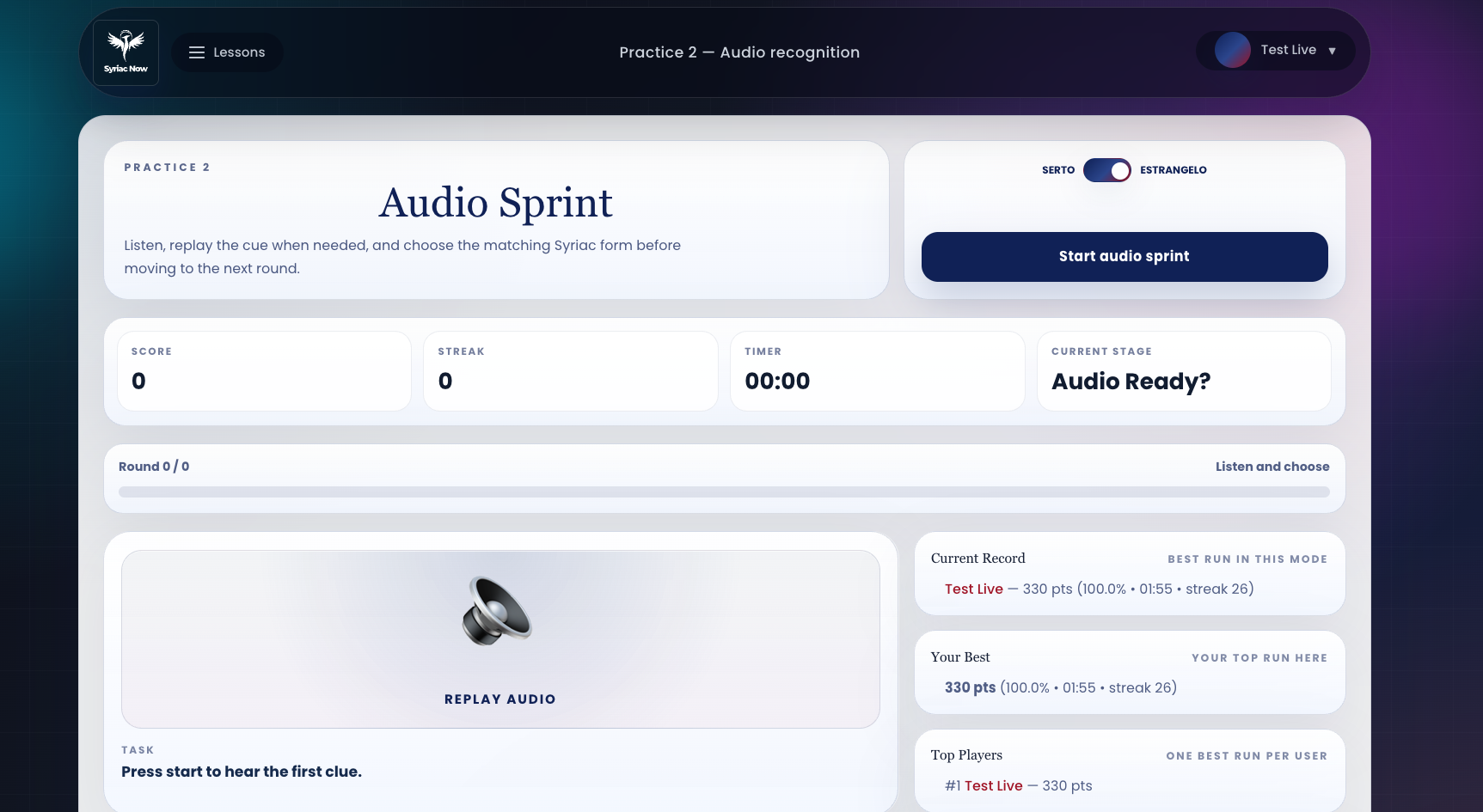
Today, this hope is closer than ever. Modern web tools make Syriac easier to explain, practice, and enjoy. Lessons can be clear and simple. Practice can happen often. Games and interactive exercises make learning feel natural. Audio helps people listen and repeat with confidence. And because it all happens online, nobody has to learn alone. People can grow together, encourage each other, and become part of a shared revival.
Start LearningAccess for free or donate to support us.

Why Syriac Matters
Born in our region from Phoenician Canaanite, Aramean speech, and Greek Christian thought, Syriac became the language of the Maronites and a living continuation of our people’s history. That is why it matters: it carries our faith, our memory, and our continuity.
When a people recovers its language, it recovers itself.
A Modern Platform for Syriac Revival
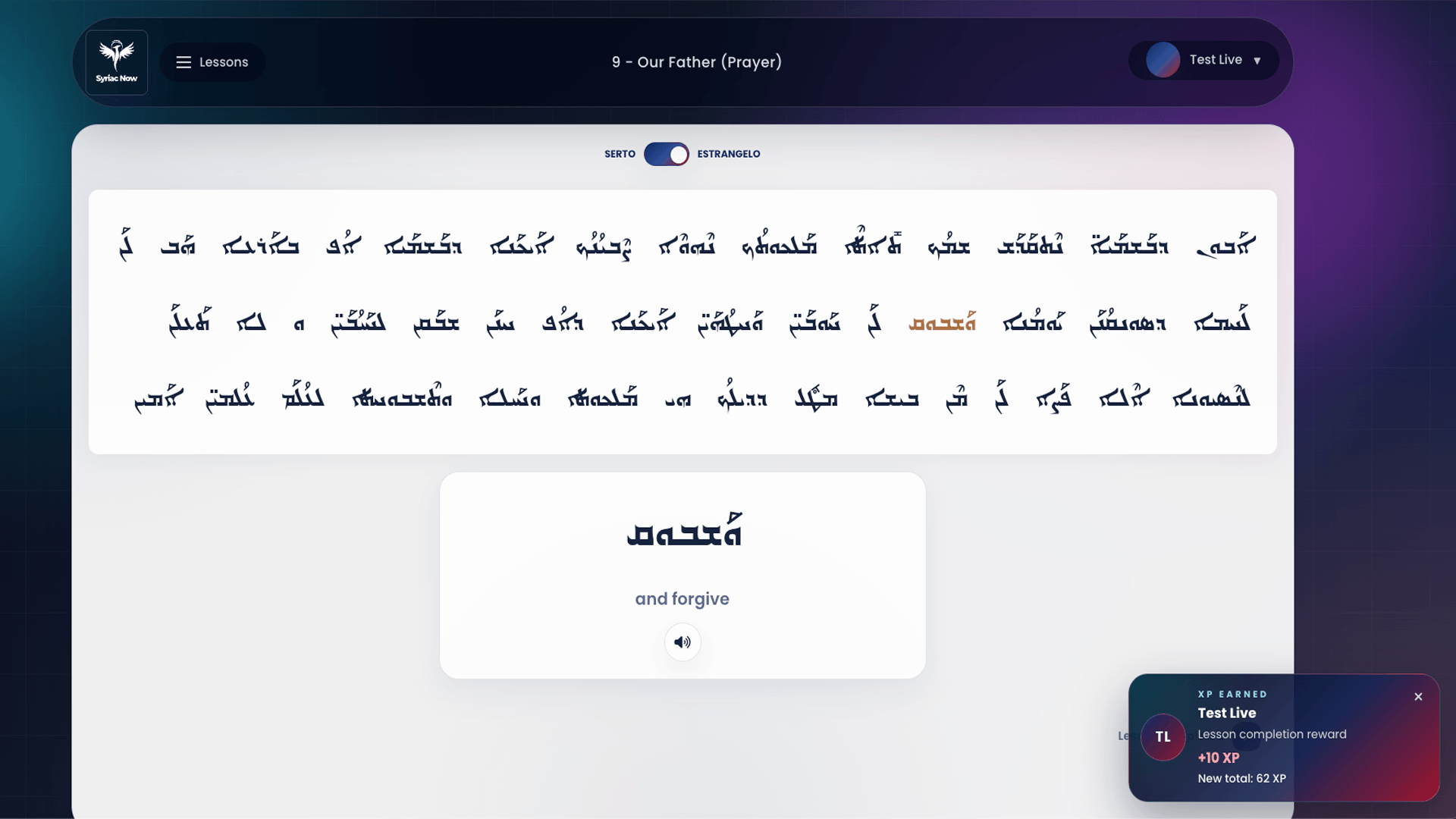
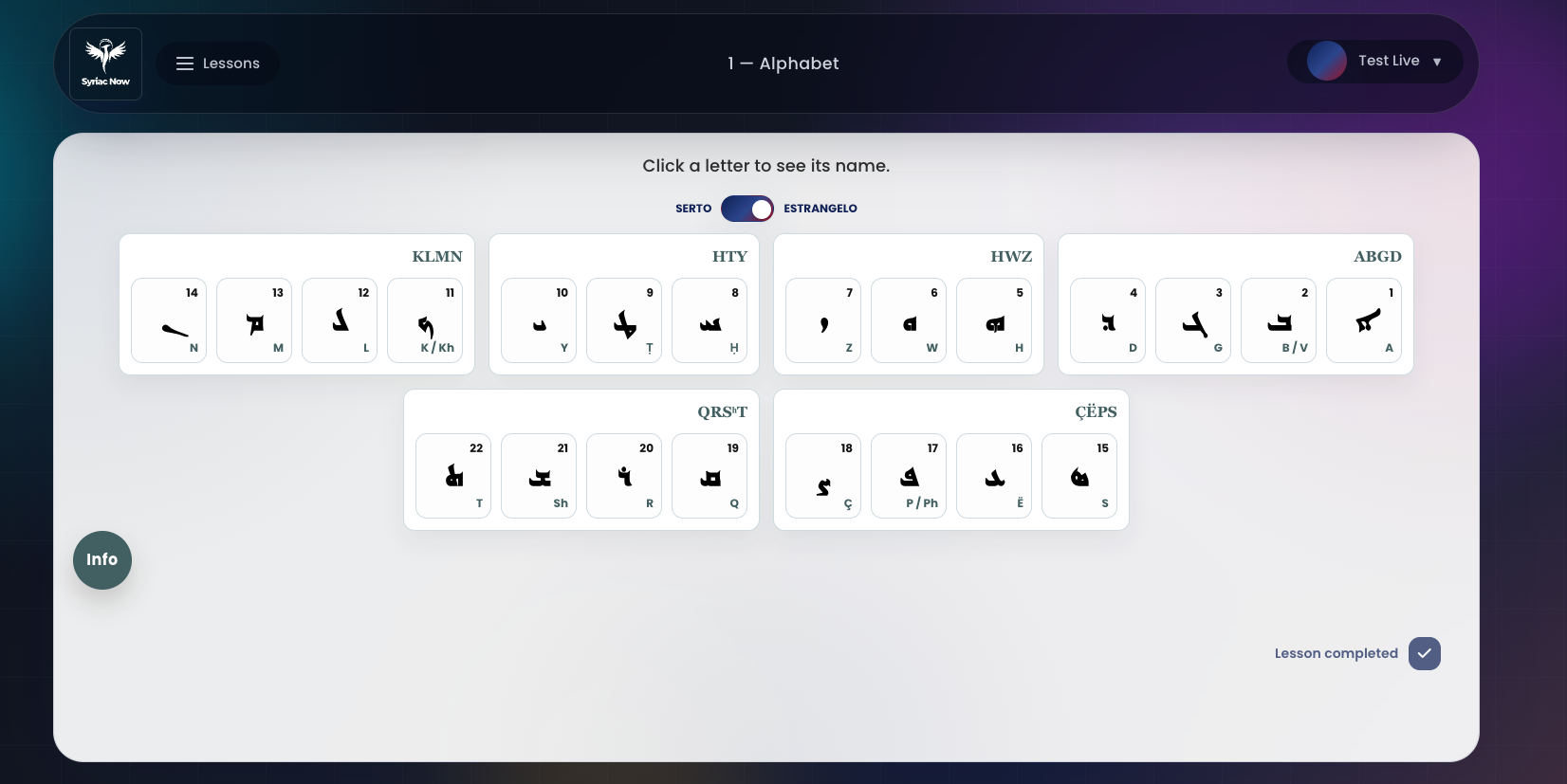
The lessons take students step by step, starting with the Syriac alphabet and simple reading, then moving into pronunciation, vocabulary, prayers, and more advanced topics. The goal is to keep learning clear, coherent, fun, and interactive from the beginning to the more serious stages.


Free Access For All
Support the Movement if You Can.
Anyone can start learning for free. We want Syriac to be open to families, students, and communities everywhere, not locked behind money. Donations are there for those who want to help keep the project alive. They support new lessons, better tools, more content, and the long work of bringing Syriac back into daily life.
Start for free. Donate if you want to help keep the revival growing.
Get In Touch
We welcome feedback, ideas, requests, partnerships, and anything else that can help strengthen this work. If you want to reach out, we would be glad to hear from you.